



What Is Social Media Content? From Views to Customers (2026)
SUMMARY
A useful social post gives someone a reason to notice your business and a clear way to buy, book, or visit. This guide looks at a barbecue restaurant with a video exceeding eight million views, a small jewelry brand, and Little Moons, with reported sales results and the context behind them. See what each business showed, which ideas you can borrow, and how to measure interest and orders. You will also see where Stillmore fits when you want your photos turned into finished visuals and captions.
Lan He
Contents

Social media content is the text, images, videos, and other material people share on social platforms. For a small business, it can introduce a product to someone who has never heard of the shop, show why it is worth trying, and give that person a way to buy or visit.
A good post can put a neighborhood restaurant in front of its next customer. The examples below include a barbecue restaurant with a video exceeding eight million views and a dessert brand with a reported jump in supermarket sales. We will look at what the content showed, what happened afterward, and which parts you can use in your own business.
- Show something a customer can recognize, want, or use.
- Give interested viewers a clear route to a visit, booking, or purchase.
- Track inquiries and sales alongside views to see whether the attention helps your business.
What Is Social Media Content?
A café's close-up of a filled pastry is social media content. So is a clothing shop's video showing a jacket on a person, or a salon's answer to a booking question. Formats include photographs, carousels, short videos, Stories, and written replies. A picture of a dress can show its shape; a clip can show how the fabric moves. A caption supplies sizes, availability, or where to find the shop.
Someone might see a dish in a friend's shared post, save it for the weekend, and look up your opening hours later. A view records exposure, a save suggests interest, and an order records a sale. A local restaurant needs nearby people to act; an online brand can serve customers farther away. Your delivery area, stock, and booking capacity affect what that attention can become.
Why Social Media Content Goes Beyond a Single Photo
At Big Lee's BBQ in Ocala, Florida, a video featured a customer who had traveled from Texas. TikTok's Big Lee's BBQ case study reports more than eight million views and customers visiting from other states. At a May 2026 showcase, owner Rashad Jones separately reported 50% sales growth in the previous year, quoted in TikTok's small-business showcase. That is a business-wide, owner-reported result; the source does not attribute every extra sale to that video. What makes the example useful is the subject: a customer's reason for making the trip. A small restaurant could show its signature dish and the experience of ordering it, with permission from anyone featured.
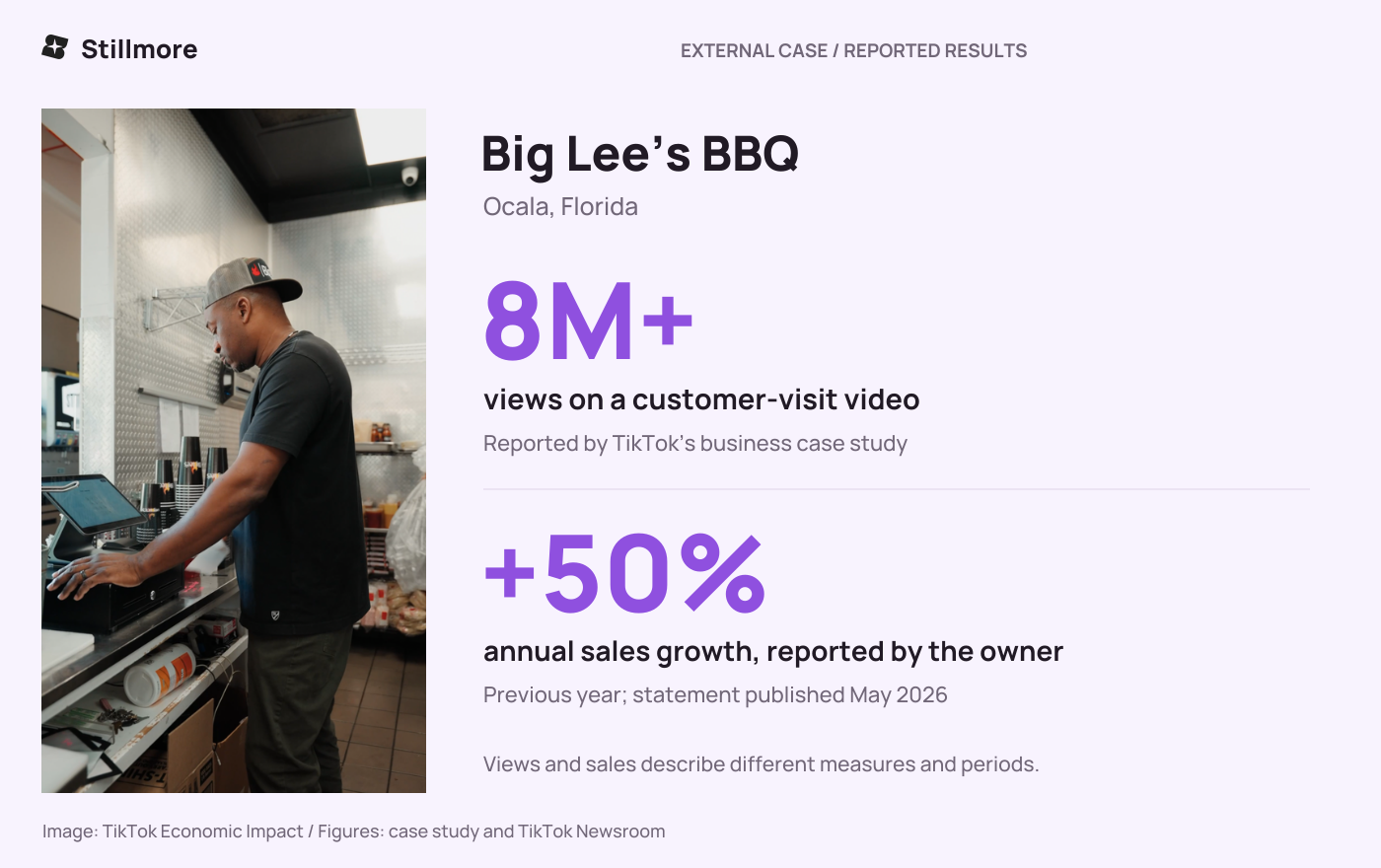
Big Lee's BBQ turned a customer's visit into a widely watched story. Photo and reported figures: TikTok's case study and May 2026 showcase.
Little Moons offers a larger-brand example. In its 2021 campaign, the mochi ice cream brand combined organic posts and customer-created content with a paid in-feed ad showing how to enjoy the product and where to buy it. TikTok's Little Moons case study reports 6.7 million ad impressions and a 1,300% increase in Tesco sales in February compared with the equivalent December period. Those are different measures, and the sales figure covers that retailer and comparison period. The useful creative choice was making the dessert's texture and serving experience easy to see, then naming a place to buy it. A food shop can borrow that approach without borrowing the campaign's budget or expecting its results.
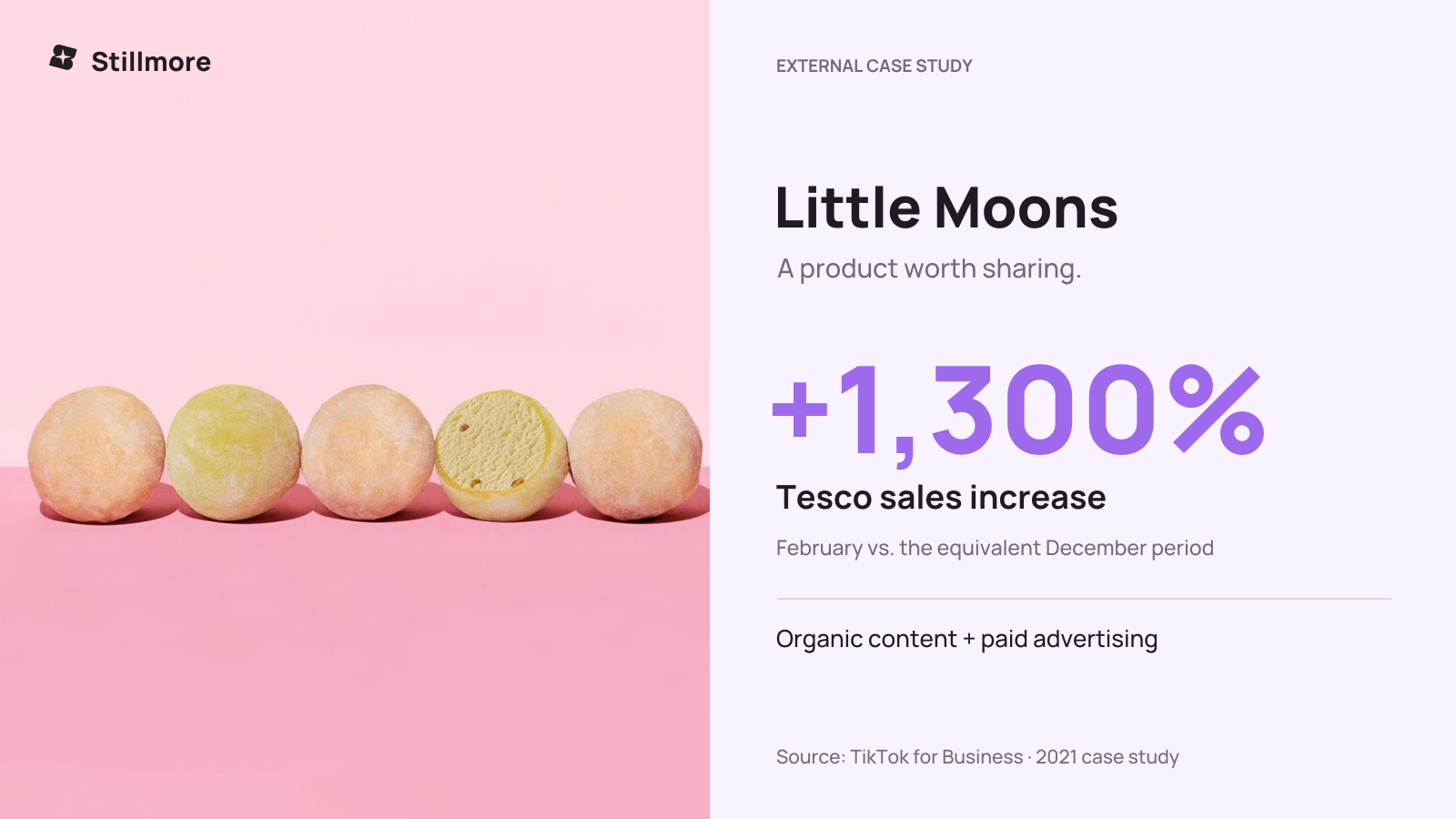
Little Moons combined organic content and paid advertising. Tesco sales rose 1,300% in the campaign's February-versus-December comparison. Source: TikTok for Business.
Social Media Content in Practice: From Photo to Post
Start with a product you want more people to order. For a bakery, that could be a filled croissant that looks ordinary until it is opened. A whole-pastry photo establishes the item; the filling provides the reason to pause. The finished post needs its name and a useful next step, such as checking availability or visiting the counter. Stillmore can turn suitable photos into finished images or videos with matching captions, with production and review handled by the team. You can choose an Inspiration or let the team make ongoing creative choices under your service setup. You supply the facts about the food and publish the finished content.
The Stillmore example below opens with menu artwork, moves closer to the pastry, and finishes with a serving moment. For your own version, tell the team which detail matters: the filling, the flaky crust, or a new flavor. Check that the result represents the item you sell, and add your location or ordering route. This is a creative example, with no claimed sales result. For your own post, record questions at the counter and orders for the featured item.
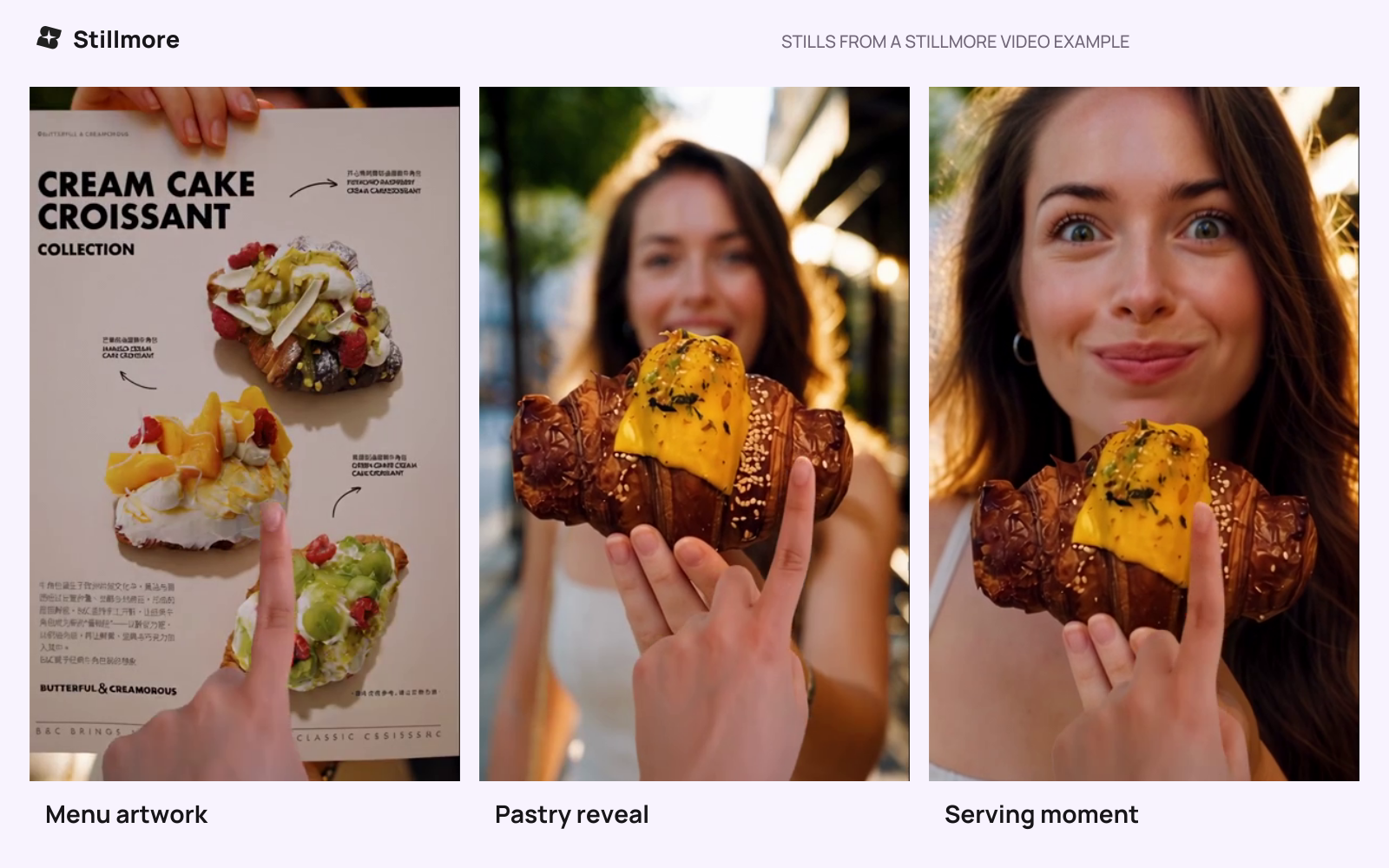
Menu artwork leads into a pastry reveal and a serving moment in this Stillmore example.
A Useful Post Versus a Product Listing
A product listing helps someone check specifications, price, and availability. A social post often supplies the reason to go there. A necklace shown in its box tells you what is included; a clip showing it worn helps you picture its scale and style. Add a product link, booking route, or location so interested viewers can act.
| Business | What to show | Next step for the viewer | Business result to track |
|---|---|---|---|
| Café or small restaurant | A signature dish being finished or served | Find the location or order | Orders for that dish; customers mentioning the post |
| Clothing shop | Fit, movement, and a useful fabric detail | Open the product page | Tracked visits, size questions, completed orders |
| Salon or local service | A real result or what an appointment involves | Check availability | Booking inquiries and confirmed appointments |
| Small product brand | The product being used in a recognizable situation | Choose a variant or buy | Product-page visits and sales from tagged links |
Compare those actions with your usual activity over a useful period, such as a week. A post may attract views while the ordering link is broken or the item is unavailable. Fix that gap before making another video. Sales revenue, profit, and advertising return describe different things: discounts, delivery, and production costs affect what the business keeps. Decide which result would make the work worthwhile before commissioning your next batch.
Where Different Formats Fit a Small Business
Small brands can benefit when other people share their products. Club Coastal's founder Kelly Bozigian said a necklace caught creator Alix Earle's attention, followed by a video from Earle; the business exceeded $100,000 in sales by week three and $1 million by month six. Those are founder-reported figures in TikTok's May 2026 showcase, with prominent creator exposure in the story. For a small accessory brand, a practical starting point is a clear worn-product view that someone can understand and share. A local café has a different task: make the food appealing to people who can visit. Stillmore's restaurant video marketing page shows directions for presenting a dish or dining space.
Match the format to the detail that would help your customer decide. One sharp photo may sell the appeal of a dessert. A sequence can explain a clothing item's fit and finish. Movement can show a pour, a reveal, or the way fabric falls. A service business can show what happens during a visit and answer the question that keeps delaying bookings. The businesses above are external examples, not Stillmore clients or typical-result forecasts. Use them to identify useful creative choices, then test a manageable version with your own products and audience. You can commission planned content through Stillmore while handling immediate updates, such as today's stock, yourself.
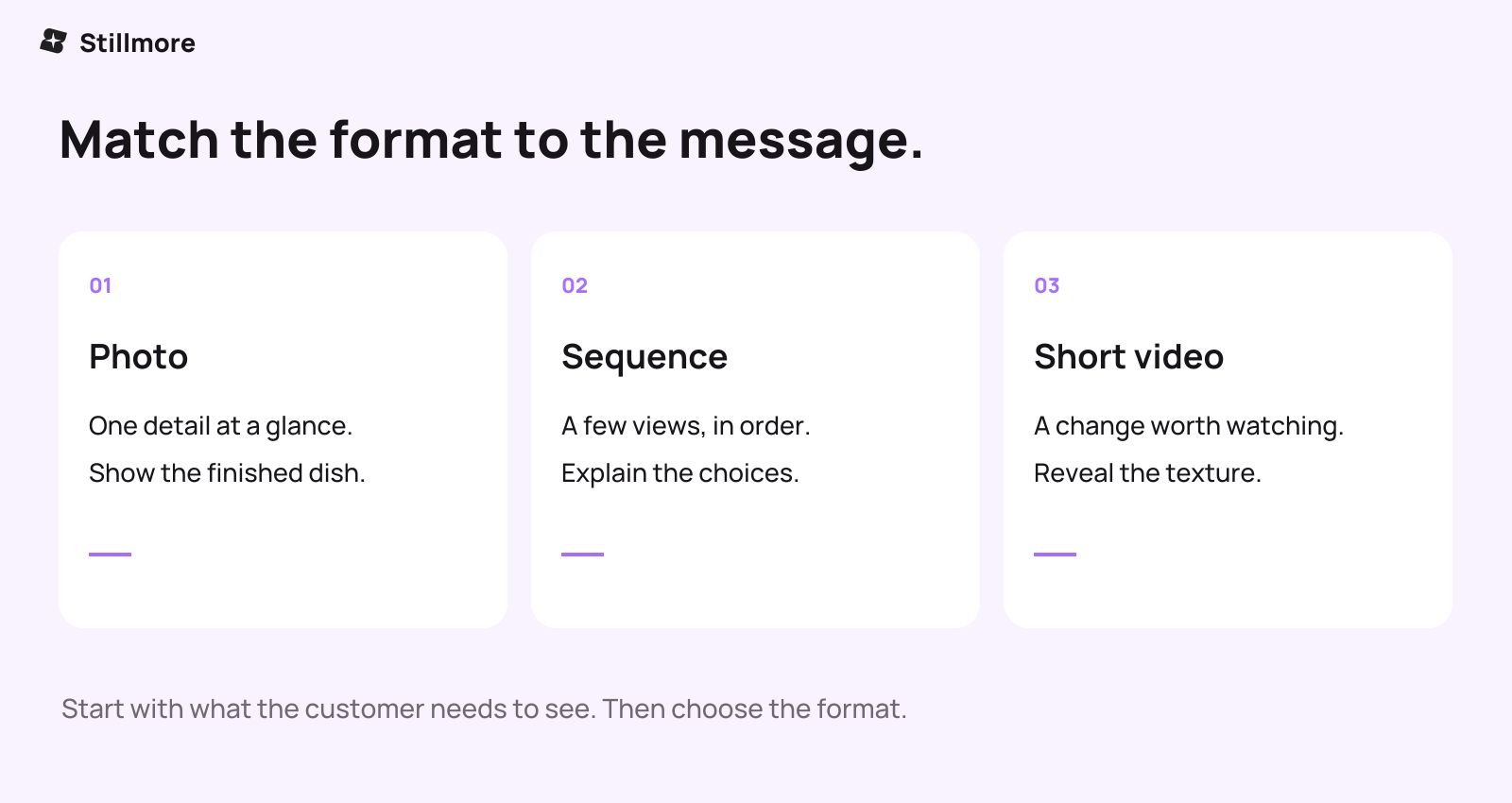
Choose the format around the detail that helps someone decide.
Getting Started With the Photos You Already Have
Choose one product or service you can sell this week. Gather clear photos and write a short brief: who it is for, what makes it worth considering, and what the viewer should do next. Include details that must stay accurate, such as ingredients, sizes, or offer dates. If your photos miss an important angle, take another on your phone. Check the selected treatment's material requirements before submitting. A focused request gives the production team something concrete to work with and gives you a result you can judge against the brief.
Stillmore's creative workflow explains how the team takes suitable materials through production and review. When your content arrives, check it at phone size and confirm the purchase or booking route works. Publish it, then keep a simple record of views, link visits, inquiries, and completed orders. Use a tagged link or booking code where practical; for a shop, ask new customers where they heard about you. If people watch but do not act, review the offer and next step before changing everything about the creative. Their questions can help you choose the next subject.
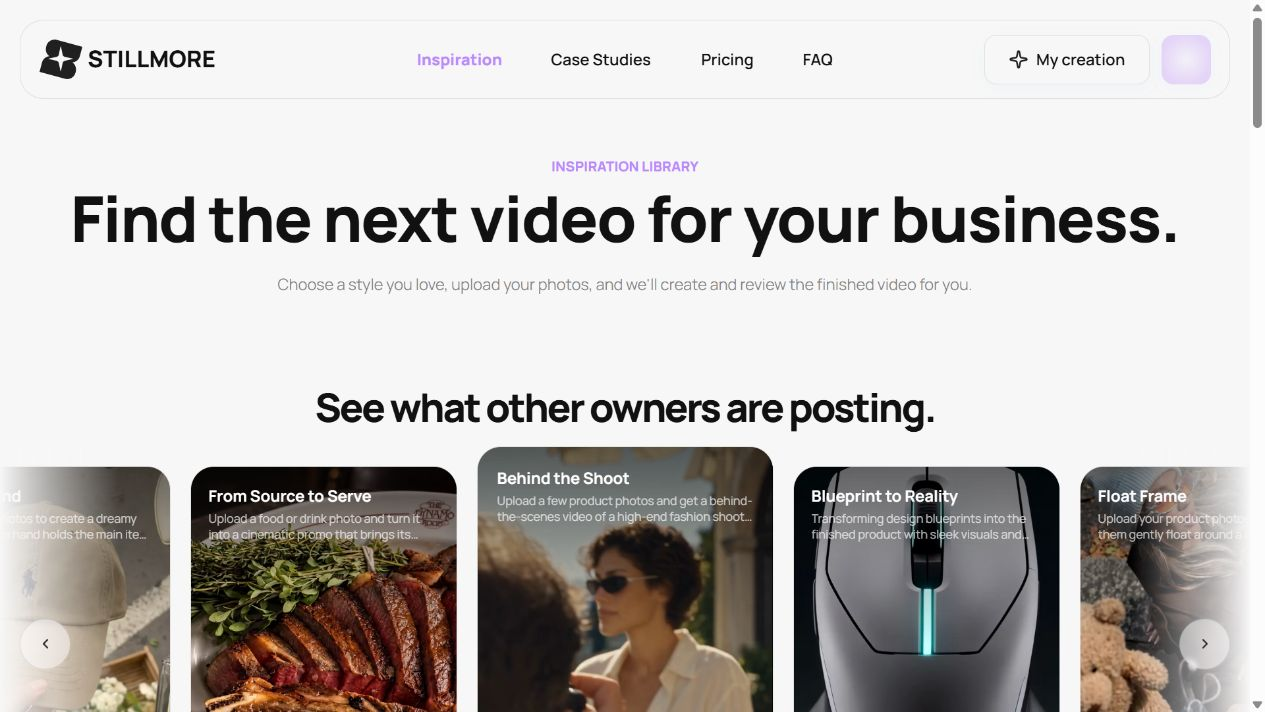
Choose a visual direction for the product or service you want customers to notice.
Conclusion: Choose One Thing Worth Showing
Social media content can give people a reason to discover your business and a route to buying from it. Start with one product, show the detail worth noticing, and make the next step clear. When you want the visuals and captions prepared for you, browse Stillmore Inspirations. Then judge the post by the interest and business it actually brings.
FAQ
What counts as social media content for a small business?
Product photos, short videos, carousels, Stories, captions, announcements, and replies all count. Choose a format that shows something useful about your business and helps the viewer decide what to do next.
Can social media content increase sales for a small business?
It can help customers discover a business and decide to visit, book, or order. The examples in this guide include reported sales growth, with different contributions from organic content, creators, and paid advertising. Your results depend on the audience reached, the offer, and your ability to turn interest into purchases.
How many views do I need to get customers?
There is no fixed view count that produces a sale. Location matters for a shop, and relevance matters for any business. Track inquiries, bookings, and orders alongside views so you can see whether the people reached are potential customers.
Is social media content the same as advertising?
Content is the material people see. Advertising is paid distribution of that material. A campaign can combine ordinary posts, creator activity, and ads, as Little Moons did. Creating content does not itself include paying for exposure.
Can I start with photos from my phone?
Yes, if they clearly show the product or service and meet the chosen treatment's requirements. Include another angle when an important detail is missing. Keep product names, availability, and other business facts accurate in your brief.
Does Stillmore publish the posts or guarantee sales?
Stillmore produces and checks images or videos and supplies matching social copy. You publish the finished material on your own channels. Stillmore does not guarantee views, viral reach, or sales; you can assess the content against the business results you track.

About the author
Lan He
I'm Lan. Years of writing promotional and editorial work in the US, mostly for companies with big audiences and bigger expectations — where a single article might reach hundreds of thousands of readers, and where the good ones kept earning traffic long after the campaign ended. I learned what makes a page survive that: one clear audience, one real question, images that show the actual work, and a structure that keeps people reading. Now I write for small business owners who do everything themselves, answering the questions they actually ask: what's worth posting, which photos are worth taking, and how to tell one story across images, video, and words. I've seen good content carry a small company further than its ad budget ever did.
Give them a reasonto stop by.
Send us your phone photos. Get posts ready to share.
See what we can make
Keep exploring
All stories ↗- How it works
Inside Stillmore: Our Creative Production Workflow
Your phone can hold plenty of useful photos while your next promotion still needs work. This article takes you inside Stillmore's creative process: shaping a visual direction, producing images and videos, and checking the details before delivery. Meet the professional craft behind the work, see how the team chooses production tools for your product and delivers finished marketing content, and learn what stays in your hands when you choose content or leave ongoing creation to the team.
- How it works
What Is Stillmore? Content Creation for Small Businesses
Stillmore turns everyday photos of your products or shop into videos, images, and captions ready to post. Use photos you already have, or take a few on your phone. Choose what you want to make, leave the ongoing content to our team, or do both.
- Social media
Outsource content creation: a small business guide
Outsourcing content creation means hiring someone outside your business to make a specific piece, such as an article or a product video. A café promoting its lunch special, for example, could send Stillmore a clear photo of the dish, its name, and the hours it’s available. The team turns suitable photos into a promotional image or video, writes the accompanying caption, and checks the work before delivery. The café owner checks the details against that day’s menu, then publishes the post. This handoff makes sense when you know what you’re selling and who it’s for, but editing keeps getting pushed aside. If you’re still choosing between bringing people in for lunch and taking advance orders, settle that first so the caption tells customers what to do.